This attribute set is meant for usage in a neural network. A key feature of this set is that most attributes are extracted in three separate time windows: one above, one centered around, and one below the point of investigation. In this way, we utilize the fact that chimneys are vertical bodies with a certain dimension. It is expected that similar seismic characteristics of Chimneys are present in all three windows and thus a correlation exists between these three windows. The neural network will recognize this and will thus be able to distinguish between real chimneys and other (more localized) features.
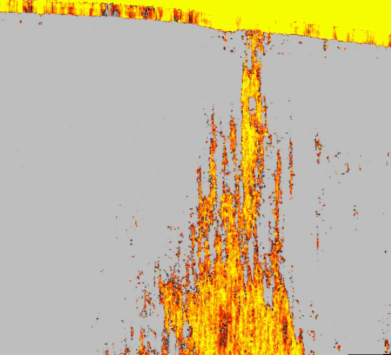
In this section, we compare the original seismic in Figure 1 with the results of chimney detecting neural network displayed in Figure 3. The main body of the chimney and its sidetracks are picked up, while other features (faults, low similarity/low energy layers) are rejected. In addition we compare a similarity attribute in Figure 2 with the neural network results in Figure 3. The similarity attribute highlights the chimney, but also other (unwanted) features are enhanced. The multi-attribute neural network is able to make a clear distinction between chimney and non-chimney. Neural networks with the NN ChimneyCube attribute set as input can (and in general will) also detect other fluid migration paths, e.g. dewatering structures.
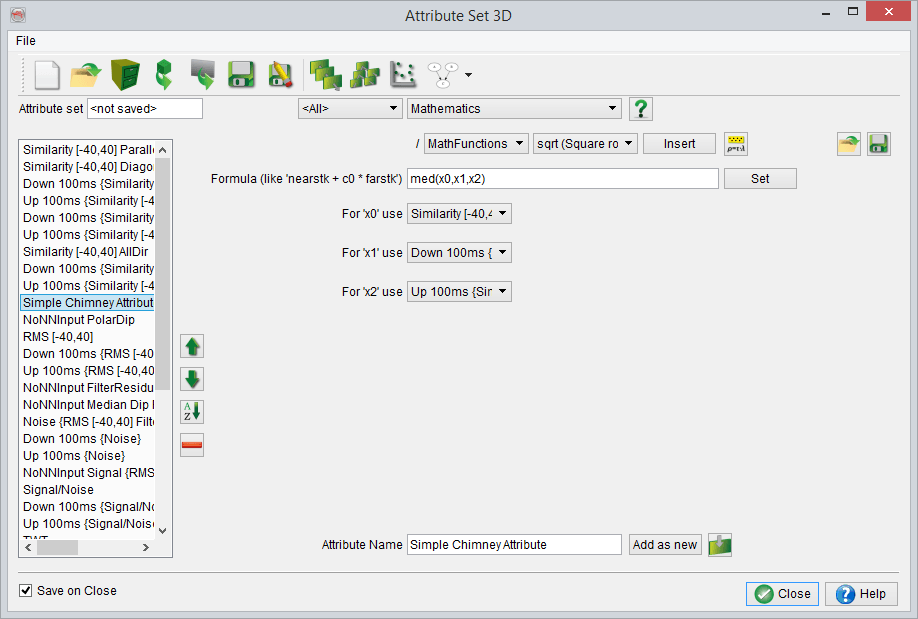
"Chimney Cube" default attribute-set
Figure 1.Chimney in seismic data
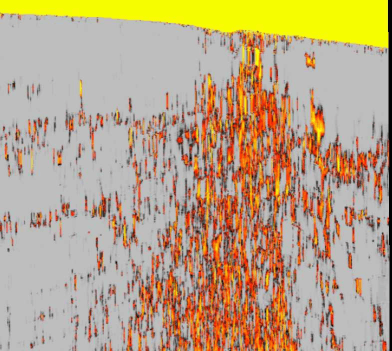
Figure 2. The similarity attribute.
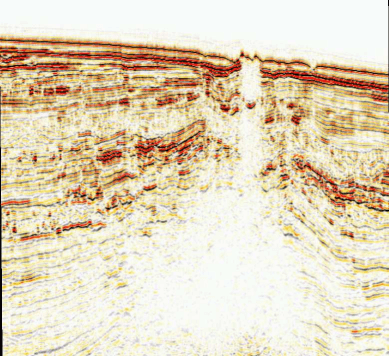
Figure 3. Result after applying a neural network with the NN Chimney Cube as input.
For more details on chimney analysis workflow, look at : dGB Tutorial videos.
© dGB Beheer B.V. 2002 - 2019