2.2.4 Edge-Preserving Smoother
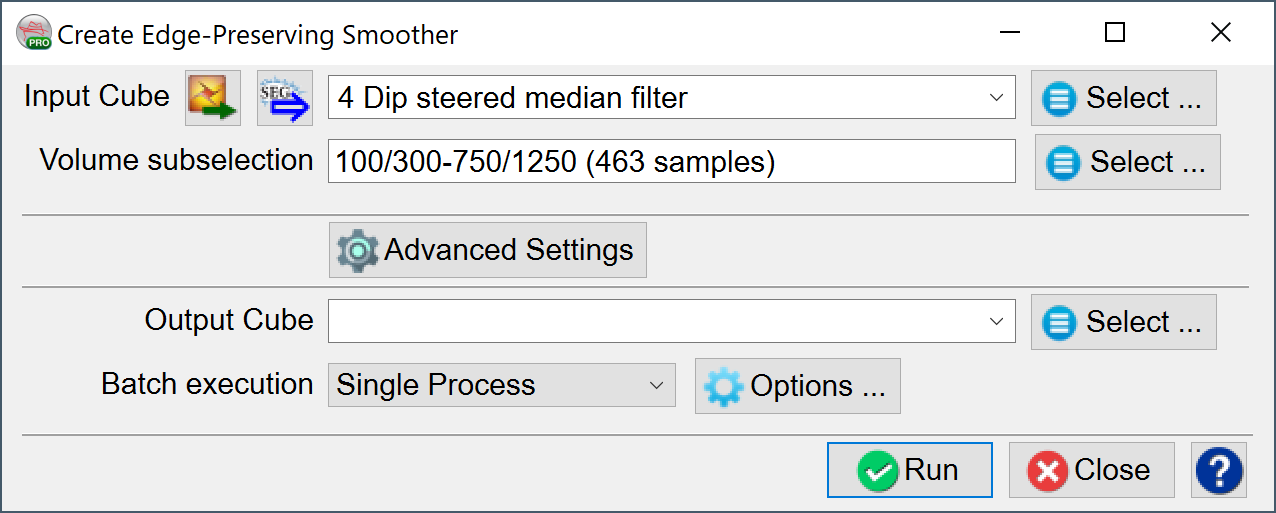
Fault interpretation is a crucial step in seismic structural interpretation. However, interpreting faults is not always an easy task especially when you are dealing with inconspicuous data. A supplementary application of the TFL attribute, the Edge-Preserving Smoother filter, is designed to make it easy for interpreters to visualize, pick and map the faults. This filter can enhance and improve seismic data visualization for structural interpretation purposes. It generates seismic volume with a razor-sharp edges that is suitable for quickly mapping fault planes.
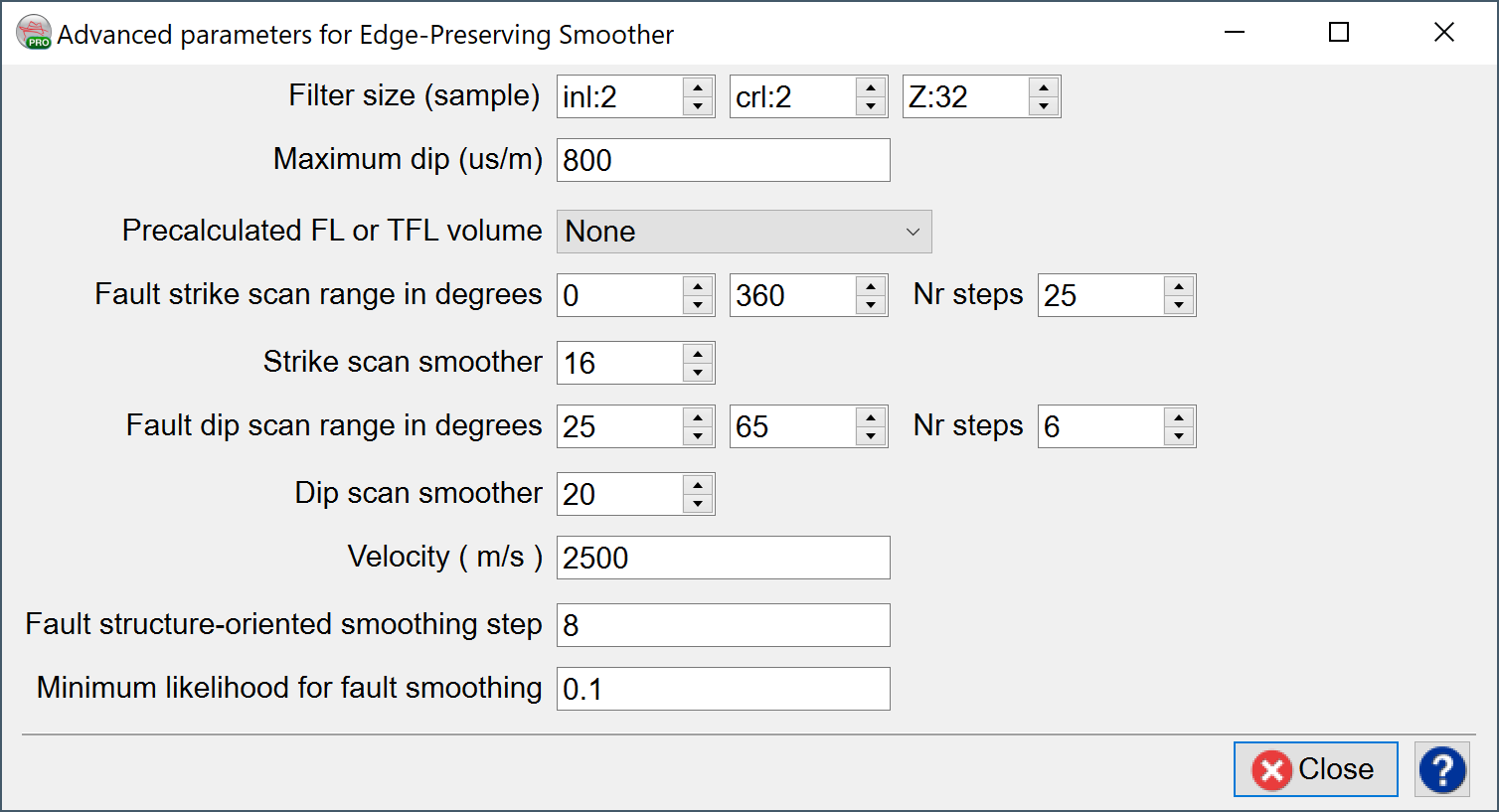
Filter Size (inl/crl/sample): Smaller step-outs, e.g. 1-1-16 or 2-2-32, capture smaller scale features. Setting bigger TFL dip computation step-outs, e.g. 4-4-100, allows to better delineate the bigger fault lineaments.
Use thinned fault likelihood volume: A user could either provide the processing parameters for a TFL volume, or to use an existing one.
Fault structure-oriented smoothing step:Radius of the dip-steered median filter.
Minimum likelihood for fault smoothing:The process uses this threshold and the thinned fault likelihood attribute to generate a binary fault location mask array. This array will provide the 3D fault distribution for the dip-steered filter.
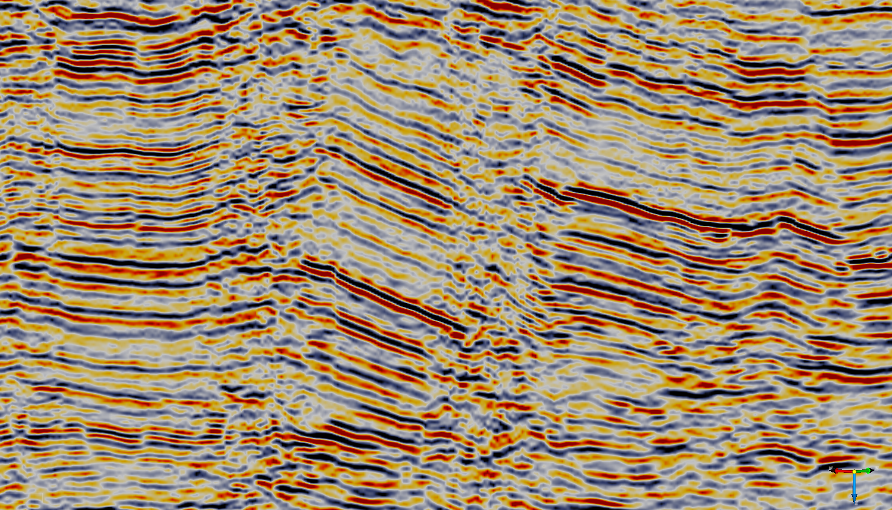
Seismic data before filtering
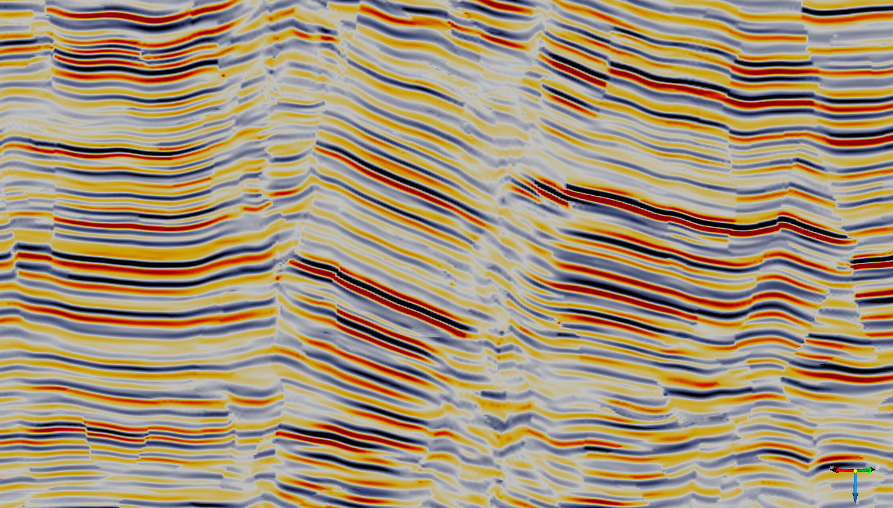
Seismic data after applying Edge-Preserving Smoother.