3.4.5 Pre-trained Models
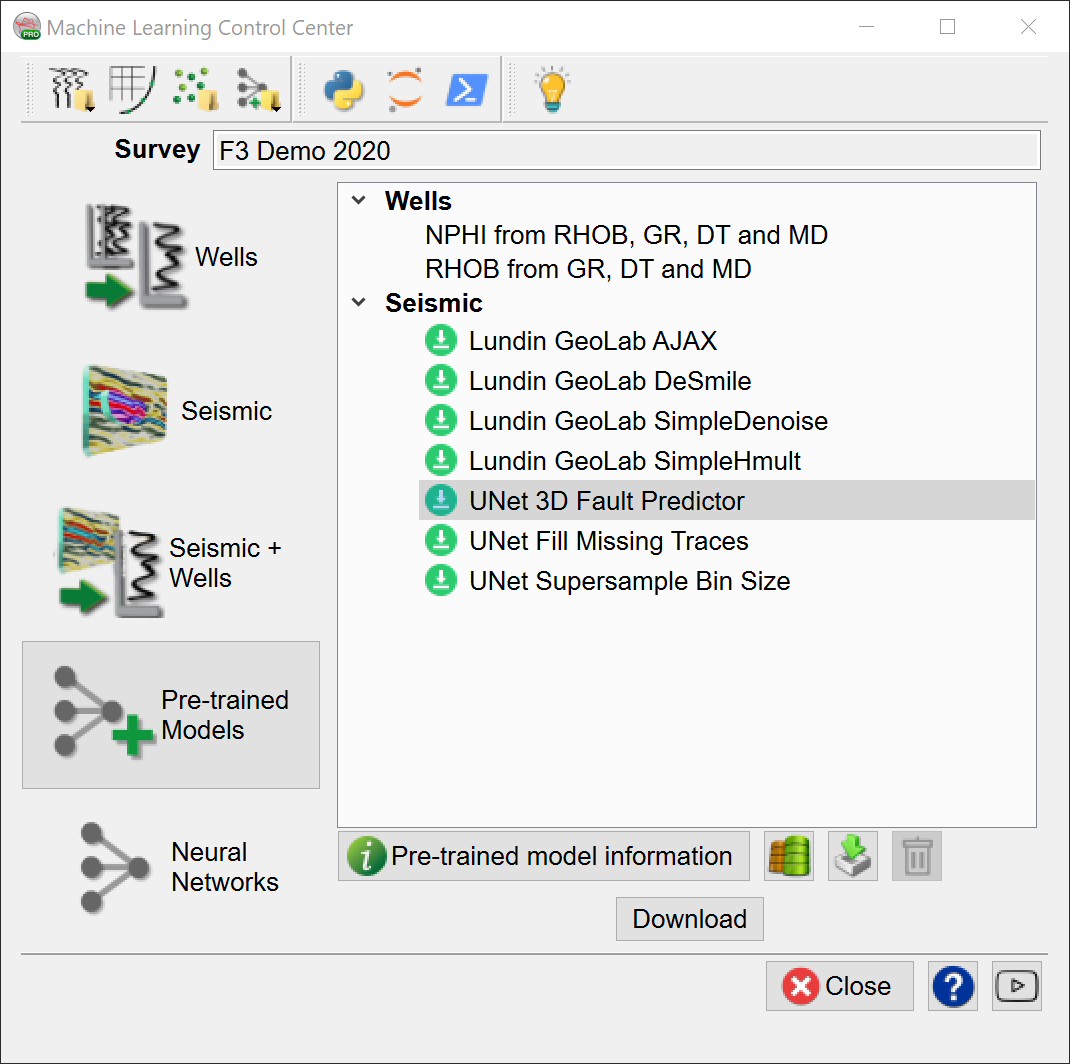
The pre-trained model currently supported in Opendtect is the Unet 3D Fault Predictor, is a powerful and super fast tool to predict faults and fractures in seismic data. This model was trained on synthetic seismic cubelets of 128x128 x 128 samples. The user does not need to train the data since this pre-trained model, shipped with the ML plugin, can be applied AS IS to unseen real seismic volumes. The output will be a 3D volume with fault 'probabilities'.
To use this pre-trained model, select the Unet 3D Fault Predictor and press Go …
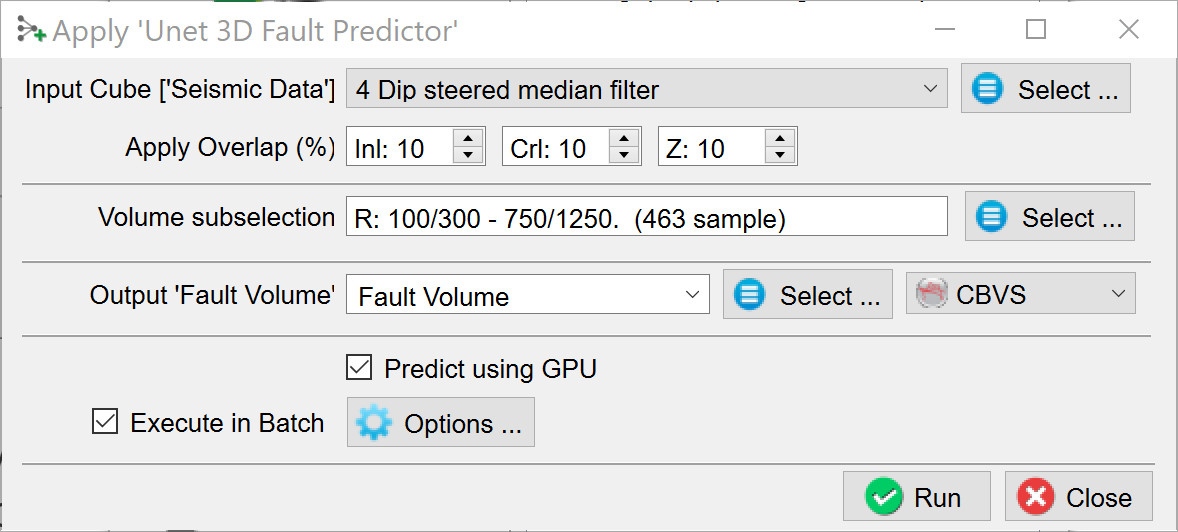
The Apply window pops up. Select the Input (Seismic Data) volume. The Overlap % is the percentage of overlap in Inline, Crossline and Z ranges of the images that are passed through the model. Optionally you can apply the trained model to a Volume subselection. Specify the output name of the Fault “Probability” Volume.
Predict using GPU is the default because this is much faster than predicting using CPU. Switch the toggle off if you do not have sufficient GPU memory to use this mode.
We do recommend enhancing the seismic before applying the Unet. Users can choose to remove any undesired noise from their seismic data by either using our dip steering median filter or the edge preserving filter which is part of the fault and fracture plugin.
The input cube is the seismic amplitude volume with 128x128x128 dimension in the inline/crossline/Z directions and the output will be a fault probability volume. Results of the Unet can be thinned in OpendTect by applying the Skeletonization (thinning algorithm).
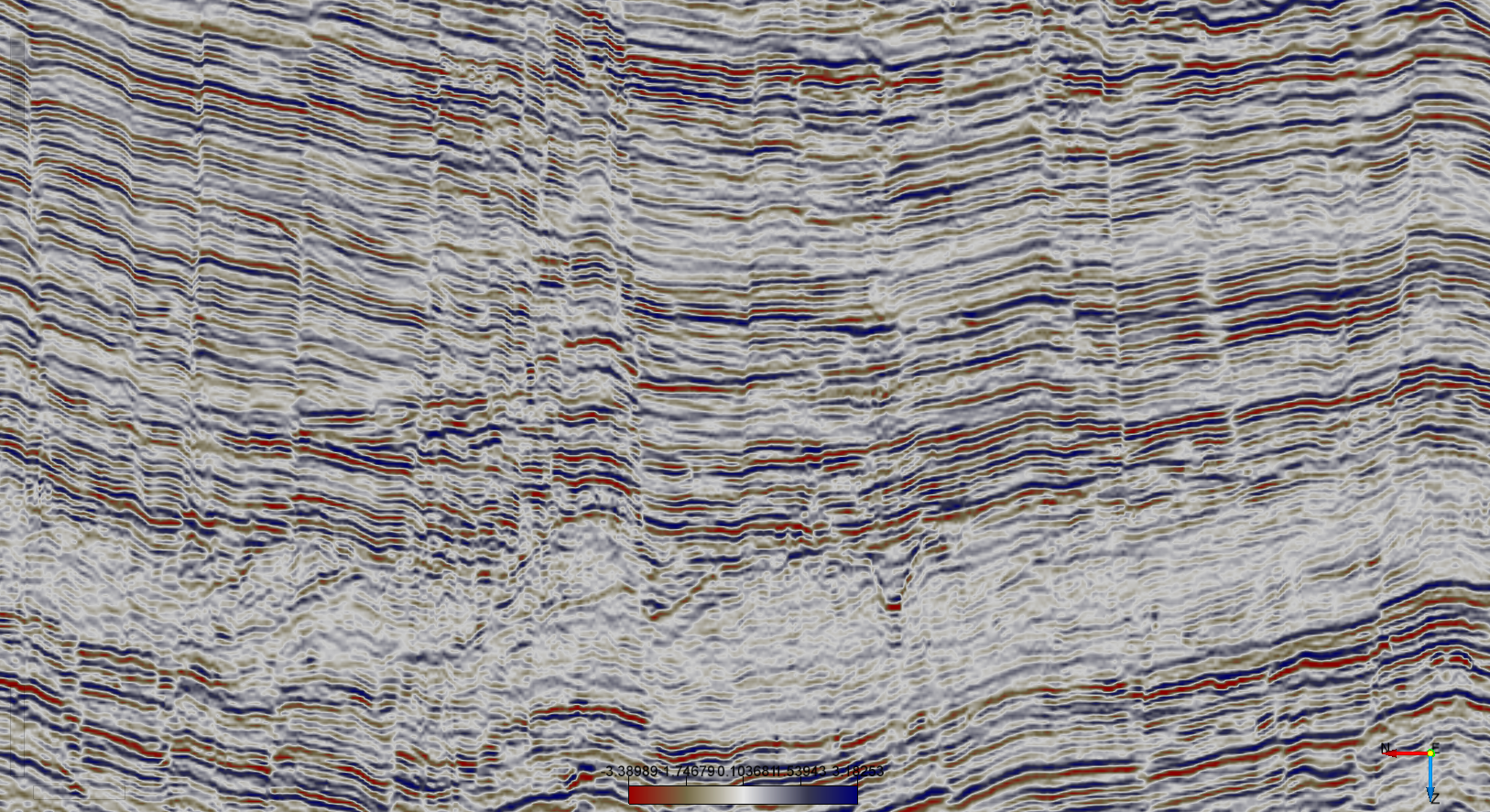
Figure 1. Original seismic (above).
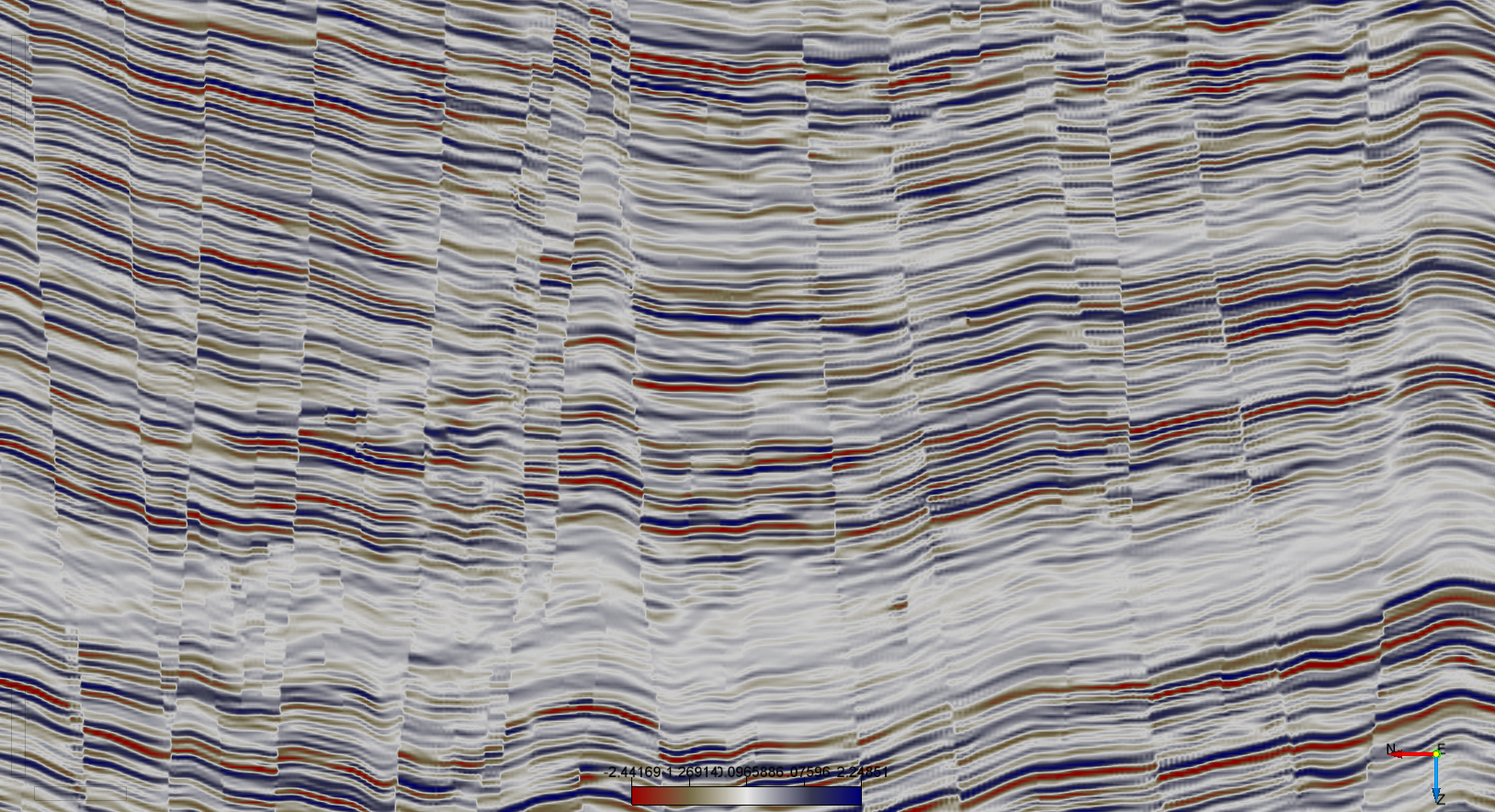
Figure 2. Seismic section after applying Edge Preserving Smoother (EPS).
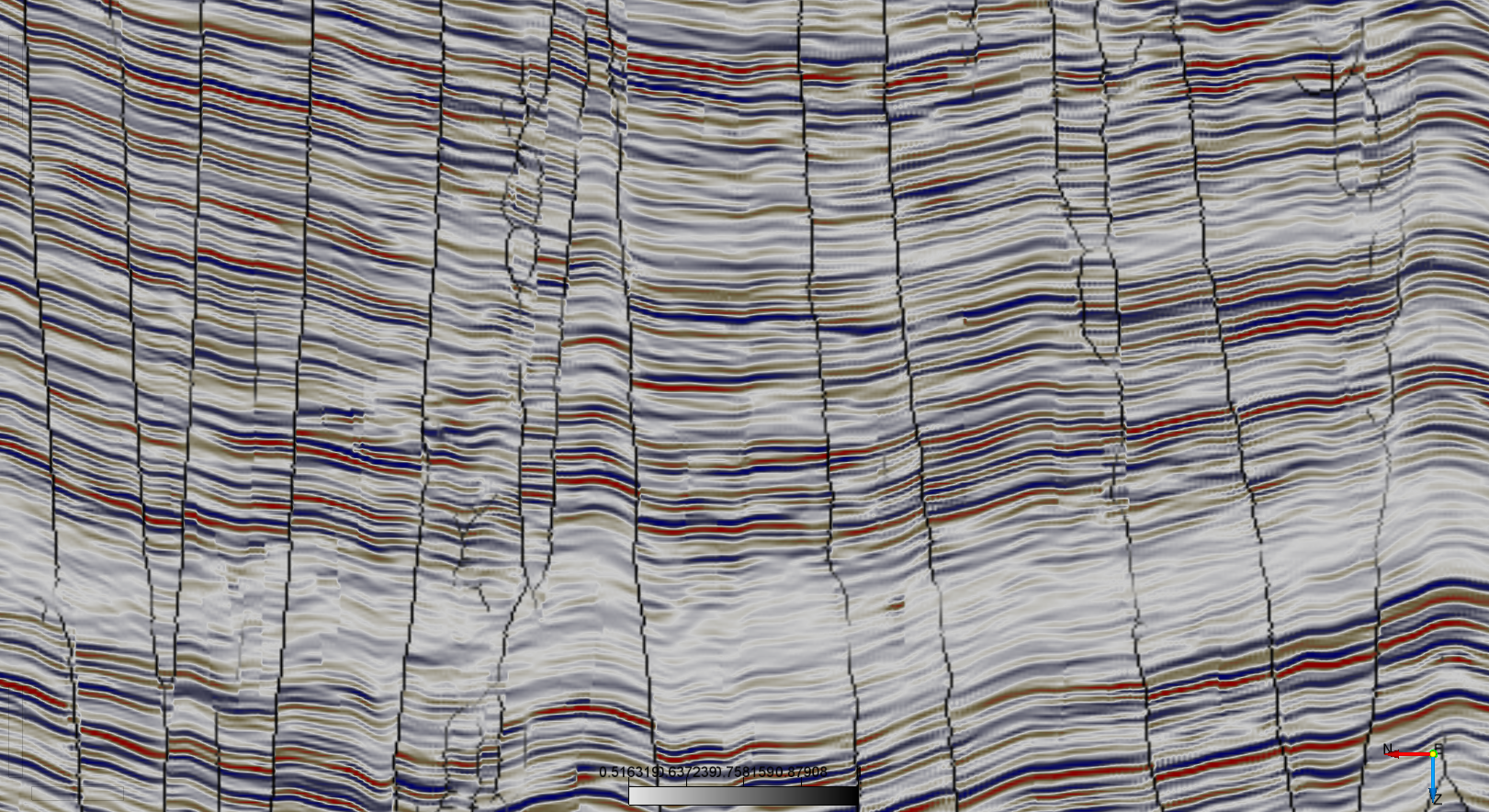
Figure 3. Results of the Unet Fault Predictor after applying the thinning. Faults are clearly imaged on both section and time slice.
For a different angle on the results, the image below is taken from an unthinned Fault Probability cube generated in this way.
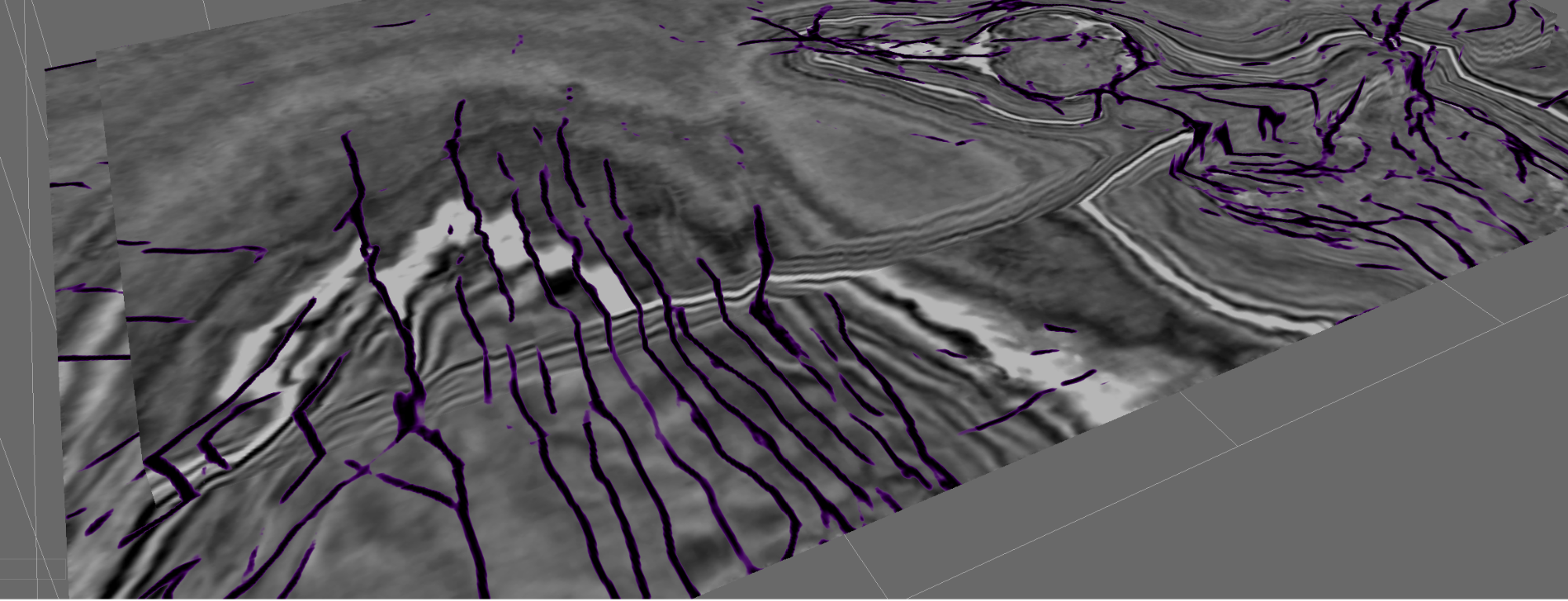
Output of the Unet 3D Fault Predictor on F3 Demo.